

London To Poland by Train in the Sixties and Seventies
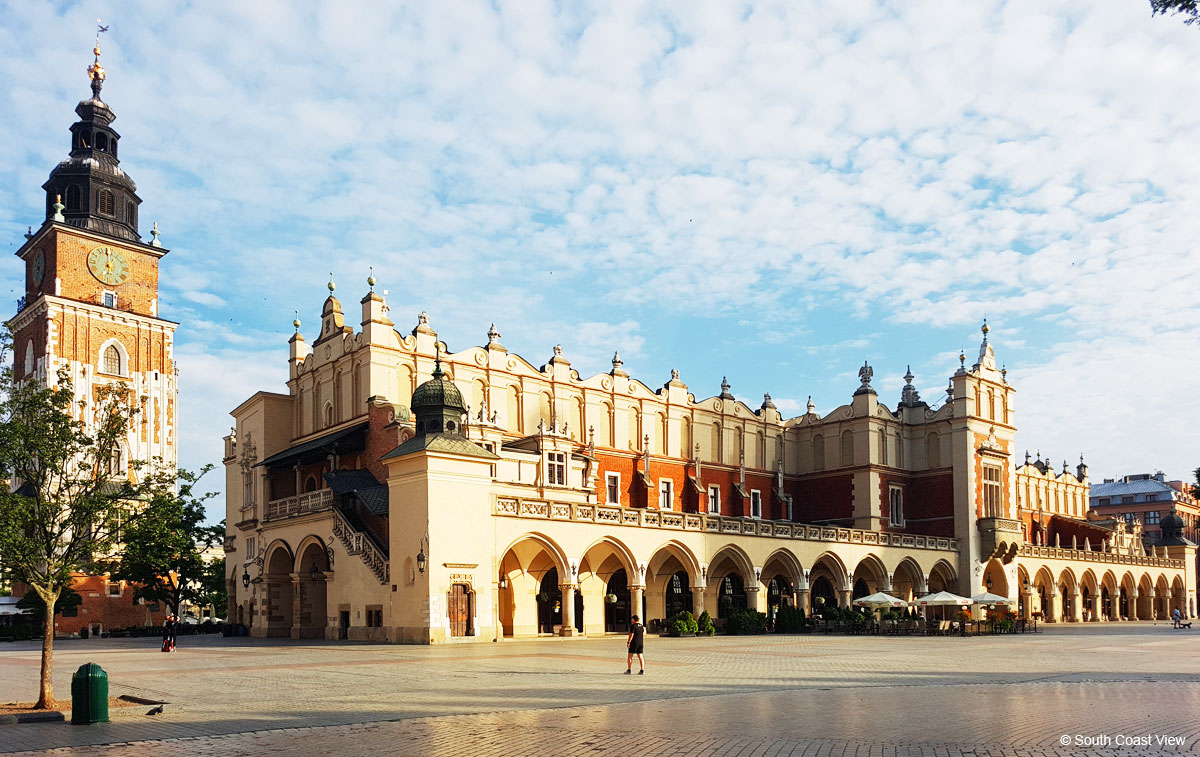
Kraków Cloth Hall in the main market square
A long time ago, in the sixties and seventies, you could travel to Poland by train and not have to change trains – almost.
London To Kraków in Poland by Train in the Sixties and Seventies
Can you imagine catching a train in London and getting off it in Kraków? This direct journey was possible in the sixties and seventies, and I travelled it many times to visit my family. The trip to Kraków took approximately 24 hours.
Of course, there was no Channel Tunnel, so you still had to cross the sea to continental Europe by passenger ferry.
To make the journey today from London St. Pancras International to Kraków would involve three train changes, and the trip would take at least 24 hours. Arguably, your journey now would be far more comfortable as you would travel in modern railway rolling stock.
Your itinerary today would involve taking a direct Eurostar train from London St. Pancras International to Amsterdam Centraal, where you would change to a direct train to Berlin Hauptbahnhof. At Berlin Hbf, you would change to a direct train to Kraków.

Przemysław Sakrajda, CC BY-SA 3.0 via Wikimedia Commons.
Fregata Chartered Railway Carriages to Poland
The following journey recounts the route from Liverpool Street Railway Station in London to Kraków.
This is how it worked if you had booked a ticket through the Fregata Travel tourist agency in London. You could book one ticket with a seat reservation to cover the entire journey to Kraków.
Liverpool Street Railway Station in London
At Liverpool Street Railway Station in London, early in the morning, you would be met by a Fregata rep who would accompany you for the entire journey.
You deposited your luggage on your departure platform, and the railway staff loaded it onto the train.
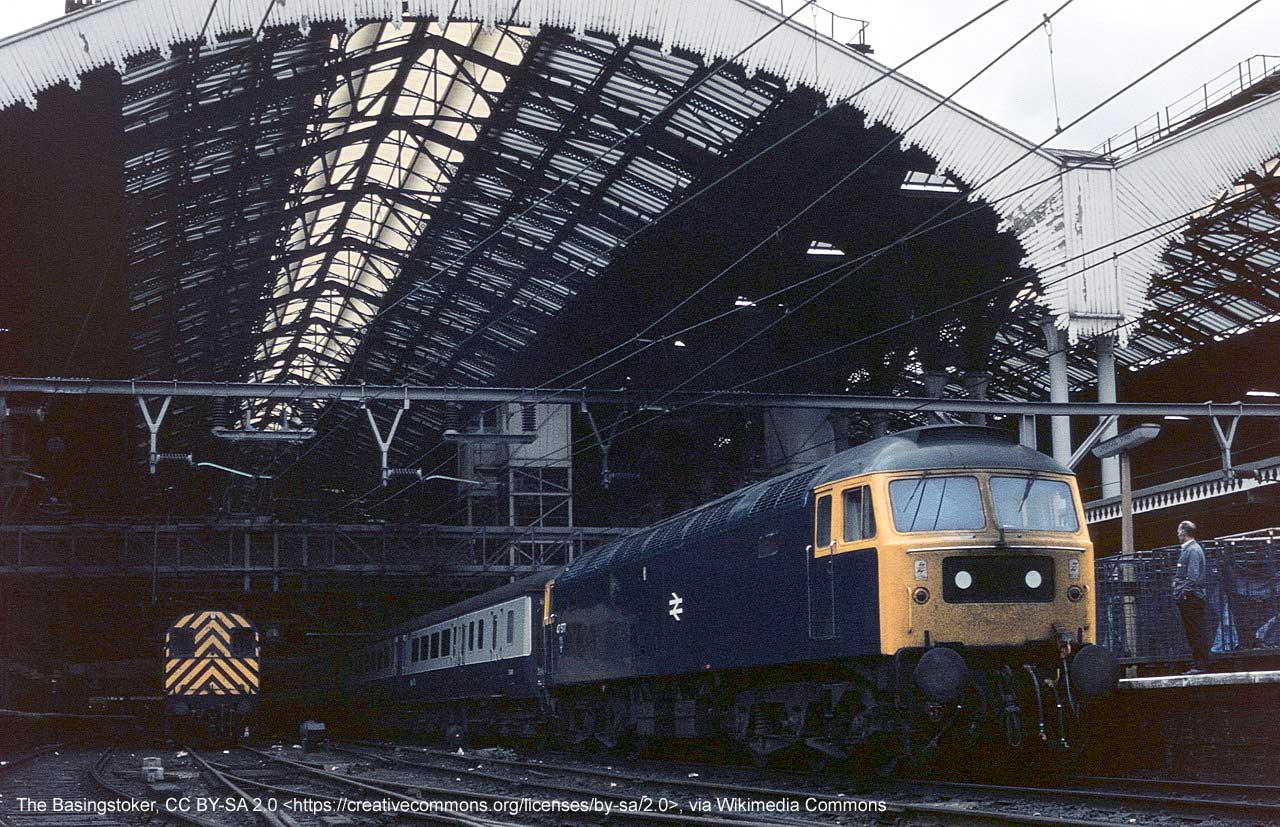
The Basingstoker, CC BY-SA 2.0, via Wikimedia Commons.
Harwich Parkeston Quay Railway Station
Your train would depart for Harwich Parkeston Quay Railway Station in Essex, and you would be seated with just your hand luggage in a dedicated Fregata chartered railway carriage.
Upon arrival in Harwich, railway staff ensured your luggage was transferred to your ferry for the 6-hour crossing across the North Sea to Hook of Holland Harbour.

Phil Richards from London, UK, CC BY-SA 2.0, via Wikimedia Commons.
Hook of Holland Harbour Railway Station
Upon arrival at Hook of Holland Harbour Railway Station in the Netherlands, your luggage was unloaded by railway staff and waiting on your departure platform. It was up to you to load your luggage onto the chartered carriage of your Poland-bound train.
The Fregata rep would direct you to your chartered railway carriage, where you would remain in somewhat cramped conditions, accompanied by your luggage for the rest of the journey.

Het Utrechts Archief, CC0, via Wikimedia Commons.
Once settled in your railway carriage, you could enjoy the scenery on the direct journey to Kraków.
All this was long ago, and I cannot remember the exact train route. However, I remember that the train passed through Hengelo, the Netherlands, and Bautzen, which was then in East Germany.
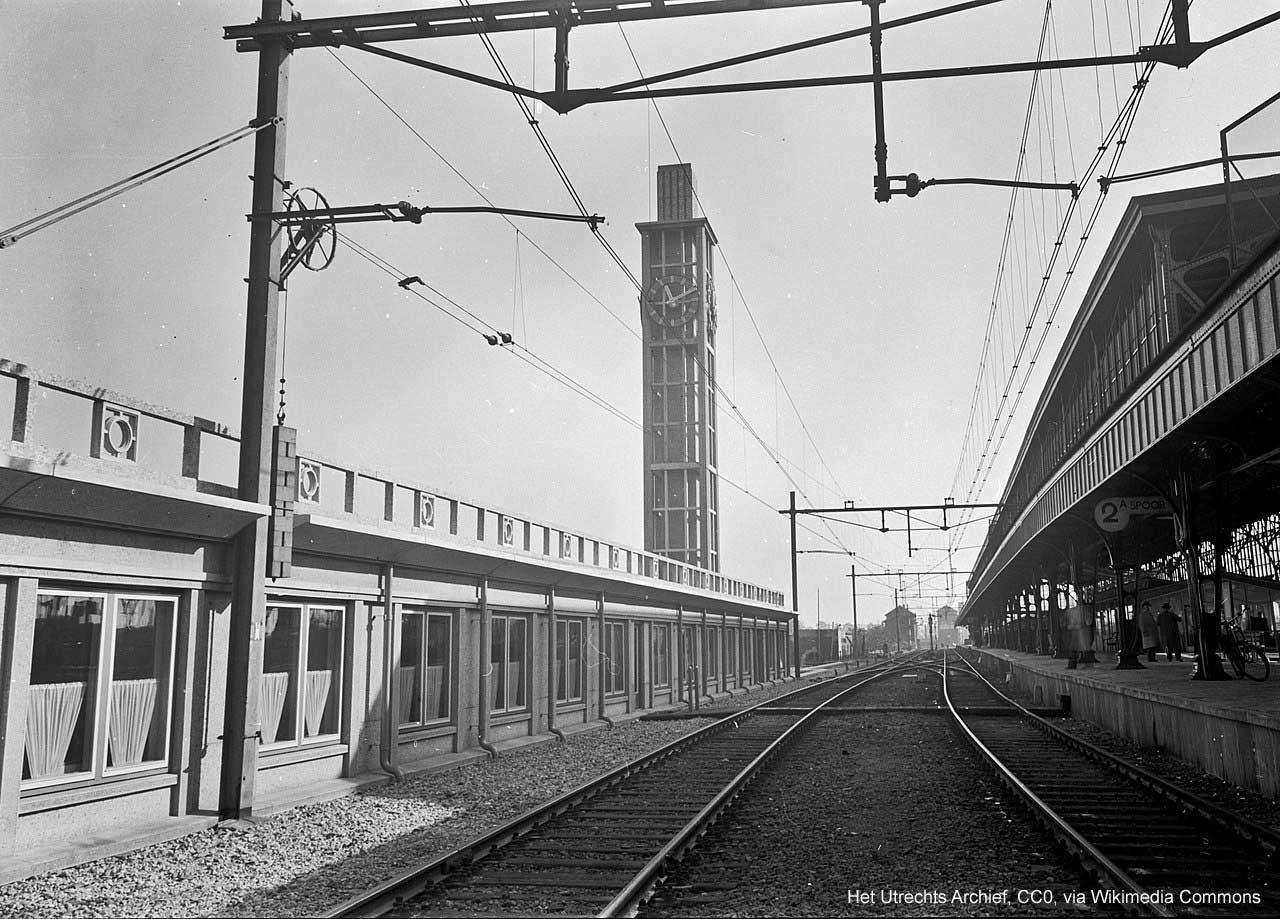
Hengelo Railway Station in the Netherlands
Hengelo, I remember well, as at the time, the town was twinned with Mitcham in the county of Surrey, just south of London, where I used to live.
This twinning was removed (either by the London Borough of Merton or Hengelo), and the removal is mentioned in the London Borough of Merton Estates Local Plan dated 2018.
Source: London Borough of Merton. PDF. Page 220. Accessed 29 September 2023.
Het Utrechts Archief, CC0, via Wikimedia Commons.
Stopover somewhere in the German Democratic Republic
East Germany was memorable because, in the evening, our chartered carriage was decoupled from the train and shunted onto sidings, where we remained for approximately six hours.
This event was always the signal for the four passengers in each train compartment to retire for the night. The four couchettes were pulled down and readied for sleep, at least for those who could sleep through the clatter of trains on the nearby railway tracks. I never got a wink of sleep during this stopover.

Blank_map_of_Europe_1956-1990.svg, derivative work: Alphathon /’æɫfə.θɒn/ (talk) derivative work: StalwartUK, CC BY-SA 3.0, via Wikimedia Commons.
At dawn, the Journey Continued to Poland
At some stage in the early hours of the morning, there was a clunk that signalled that a shunting engine had engaged with our carriage.
Shortly afterwards, the carriage would be shunted and coupled to a locomotive, often a steam engine, which would then pull a new set of carriages bound for Poland.
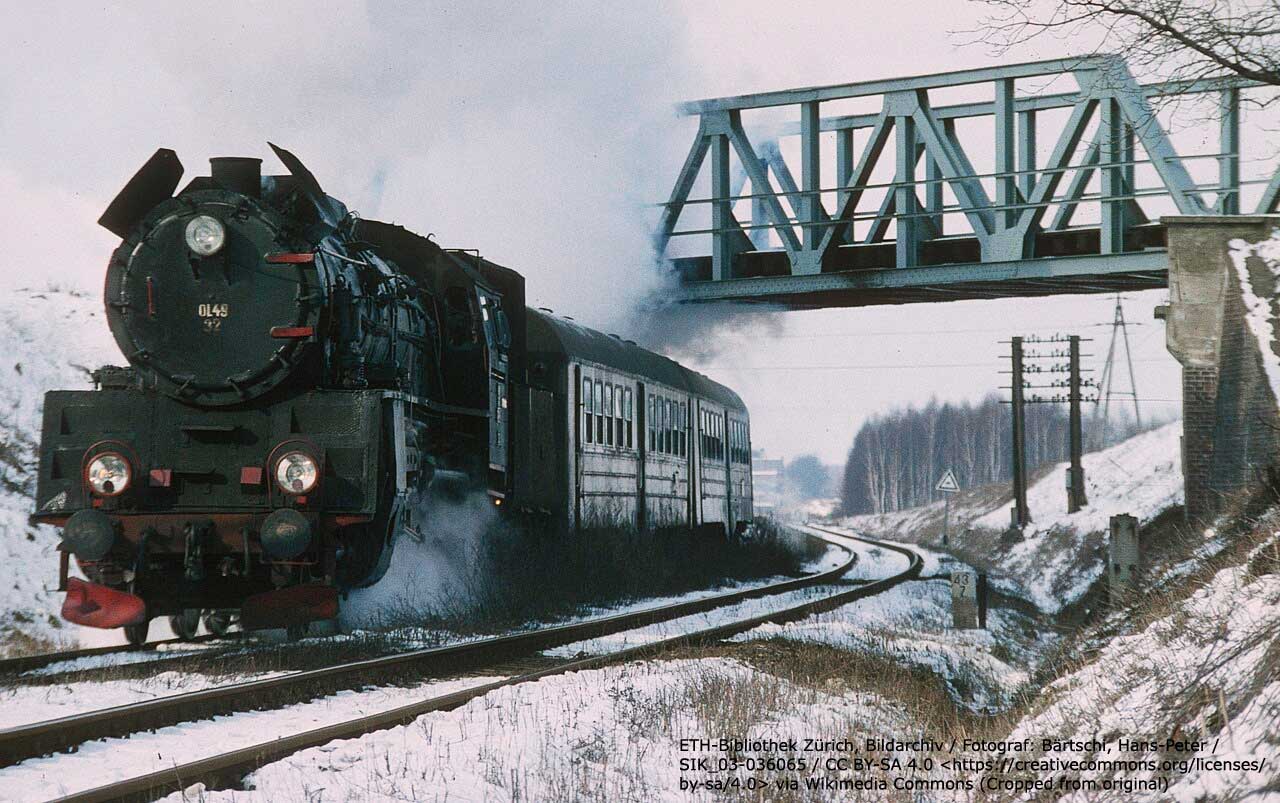
ETH-Bibliothek Zürich, Bildarchiv / Fotograf: Bärtschi, Hans-Peter / SIK_03-036065 / CC BY-SA 4.0 creativecommons.org/licenses/by-sa/4.0>
via Wikimedia Commons. (Cropped from original).
Bautzen Railway Station in the German Democratic Republic
During the brief stop at Bautzen Railway Station, I observed that the platform signage displayed the station name in both German and Sorbian.
This dual-language signage remains the case today, at least on the facade of the main station building, as can be seen in a relatively recent associated photograph showing the station name signage for Bahnhof Bautzen in German and Dwórnišćo Budyšin in Upper Sorbian.

Mariusz Paździora, CC BY-SA 4.0, via Wikimedia Commons.
The Bautzen region in Germany has an ethnic Sorbian minority. The Sorbs are a Slavic people numbering approximately 60,000 people in the area.
Source: Germany – Sorbs at the Minority Rights Group website. Accessed 29 September 2023.
Bautzen is close to the Polish border, and if I remember correctly, the journey time to the border took approximately 1 hour.
Passport and Document Checks Throughout the journey

Officialdom in the Netherlands and the Federal Republic of Germany was marked by only one visit per country by Dutch and West German passport controllers. This situation changed markedly once the train crossed into the German Democratic Republic. I would say the controls in East Germany verged on intentional harassment, as the passport controllers visited multiple times to check passports, announcing themselves gruffly as passkontrolle! Once the train crossed into Poland, there was one check by Polish passport control and customs. If you were unlucky, the customs official would ask you to open your luggage and possibly question you about the contents.
Arrival at Kraków Railway Station in Poland
Arrival in Kraków was always memorable, as I knew a family welcoming committee would be waiting to whisk me home for a much-needed rest and food.
Having caught up with family news and been well fed and watered, it would be time to retire. After the thrill of the railway journey, dreams were sweet and full of anticipation of coming adventures with family.
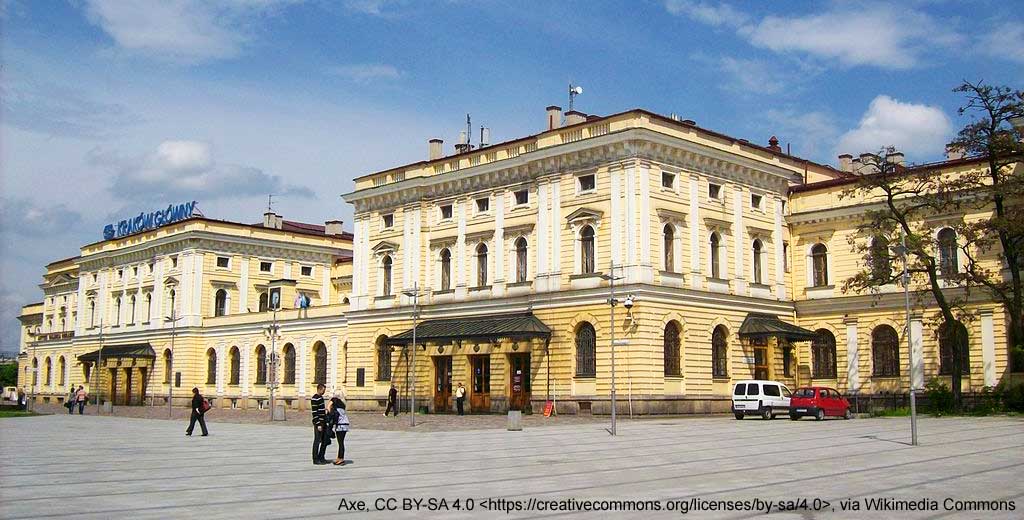
Axe, CC BY-SA 4.0 via Wikimedia Commons.
Image cropped from the original file.
Appeal for Information
It has been decades since I experienced these journeys, and I may have forgotten some points. If you notice any errors in this article or can offer me new, related information, I would be grateful. My contact details are at the foot of this page.
Comments are welcome. Did you make this journey to Poland by train in the sixties or seventies or back from Poland to the UK? Is there anything I have missed?
London to Poland by Train in The Sixties – Watch on YouTube
This article has recently featured on South Coast View’s YouTube channel.

Subscribe to future posts by email. No spam, just an email when a new post is published. View the posts.
Related articles in Railways and Tramways. View all in Railways and Tramways.
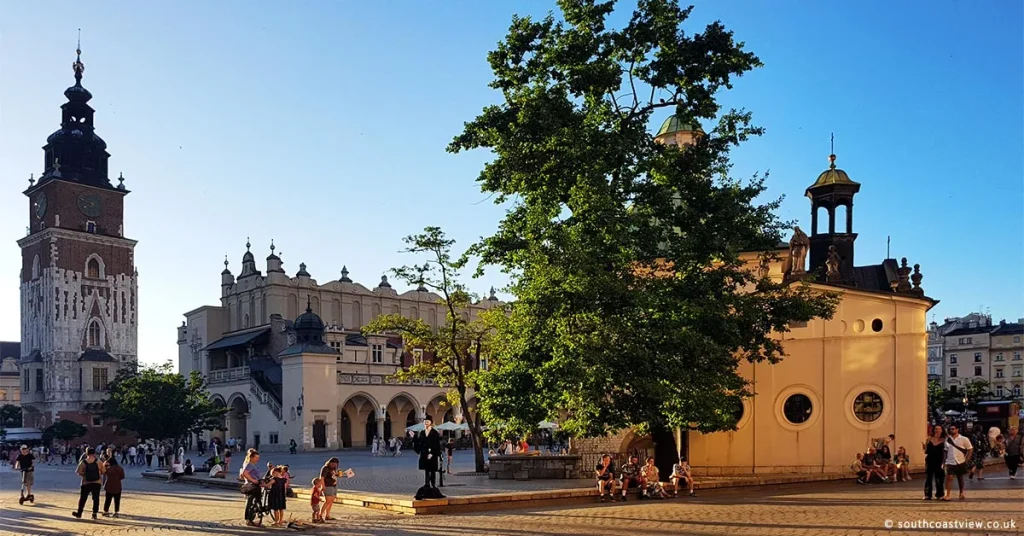
Kraków Old Town – An Unforgettable Visit
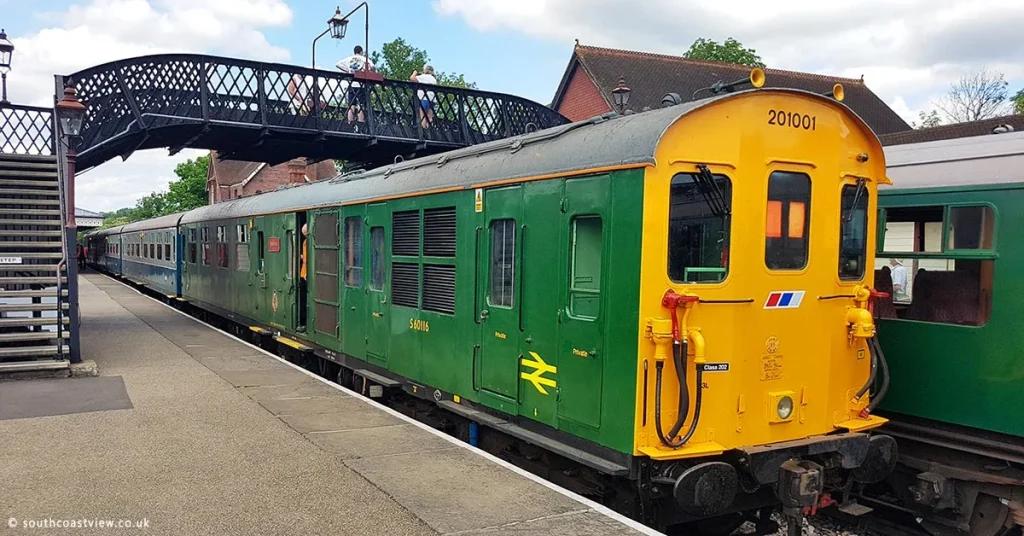
The Bluebell Railway – An Unforgettable Visit
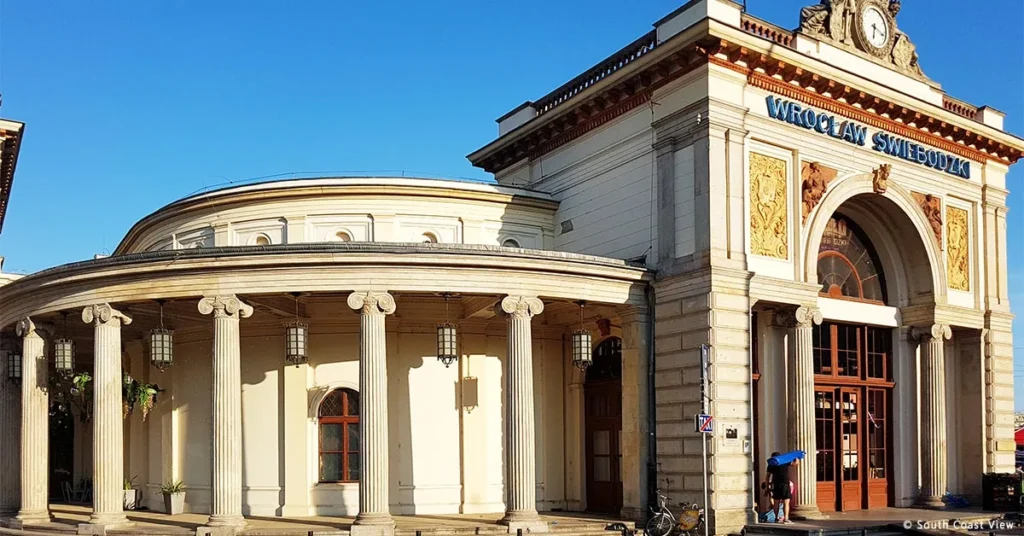
Wrocław Świebodzki Station in Poland

I first went by train in 1968 to Warsaw from London as a teenager.
I remember crossing from West to East Berlin and having armed guards come on board and having my passport stamped about 8 times .
It was a little frightening at the time but got used to it as I did another 2 visits by train before the Iron Curtain was lifted
It was certainly an adventure in those times.
Many thanks for your comment, Richard. Your experience and adventure certainly aligns with mine.