 Follow on Substack

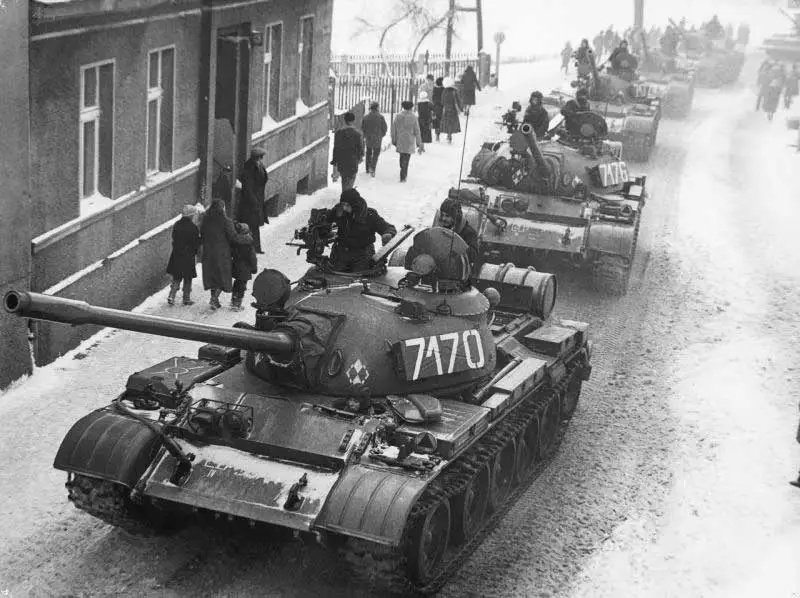
When martial law was declared in Poland on 13 December 1981, beyond just deploying tanks, the regime crippled the nation’s telephone and telex lines with a targeted strike. This was Operation Azalea (Akcja “Azalia”), a sophisticated blackout designed to isolate the Solidarity movement by silencing every telephone and telex machine in the nation.
The Midnight Silence
Poland lost its telex lines and telephone service
The takeover of telephone exchanges
At midnight on 13 December 1981, units from ZOMO (Motorised Reserves of the Citizens’ Militia) and military technicians participating in Operation Azalea simultaneously entered and secured Poland’s entire state‑run telecommunications infrastructure. According to the Gdańsk Region of NSZZ “Solidarność” (trade union Solidarity), this included the takeover of 451 telephone exchanges across the country. Source: Noc generałów, Region Gdański NSZZ „Solidarność”. In Polish.
The takeover of telex exchanges
According to 1976 data published in the Polish telex network overview, the system consisted of a two‑tier structure of CATX‑W (hub) and CATX‑Z (collector) exchanges. Engineering sources indicate that this structure remained essentially unchanged until the early 1980s. Based on the 1976 configuration, Poland likely operated 45–55 telex exchanges in 1981, although no archival source provides an exact figure. Source: Teleks w Polsce (in Polish) at Wikipedia. Note: The number of 45-55 telex exchanges is based on a reconstruction of the data from the Wikipedia article above.
Probably The Last Telex Sent From Poland
Sent by an unidentified journalist
On Saturday, the last reports mentioned military vehicles moving in the Gdańsk area, but activists could not find out more. The final telex was sent on Sunday at 1:45 am, by which time martial law was already in place, and the Polish military had taken control. The journalist, whose identity remains unknown, noted that telex connections were down, but the message still [somehow] got through. It delivered urgent news about the start of the round-up of Solidarity activists. The dispatch ended with the following:
When Poland Lost its Telex Lines
The last international telex message that got through
IT IS POSSIBLE, THAT EVERYTHING ENDS WELL, BUT I AM AFRAID. MAYBE TODAY I WILL NOT SLEEP, IT IS HORRIBLE, FOR WHAT THEY ARE CAPABLE, WHAT ARE THEY DOING WITH THOSE PEOPLE? I AM WORKING ON THIS FOR LONGTIME, BUT EVEN I CANNOT COMPREHEND HOW HUMANS CAN BE CAPABLE FOR SUCH EVIL ACTS, AND UNFORTUNATELY THE WORST IS YET TO COME. LET’S HOPE NOTHING HAPPENS WITH THOSE GOOD PEOPLE. GREETINGS.Source: Blinken OSA Archivum
Telex in Poland
A Dedicated Network
Although Polish telex and telephone services often shared the same physical cables, they were not the same network. Telex utilised a fully dedicated public switched network, complete with its own separate, distinct switching equipment.
- Inland vs International: International telex traffic was routed through a primary gateway exchange in Warsaw.
- The Disconnection: Because the telex network was distinct, the military had to send specific units to telex-only exchanges to prevent Solidarity leaders from coordinating via printed messages.
- Direct Dialling: While international voice calls usually required an operator in 1981, international telex was more advanced. In many cases, London-based users could dial Polish telex numbers directly*, making the telex network a high-priority target for the military to prevent news from leaking to the West. *Source: Personal experience of the author.
Trusted Bodies Remained Connected
Separation of Networks: Most “trusted” communication did not actually run on the public telex or telephone lines. The Ministry of Internal Affairs (MSW) and the military used dedicated, separate networks that remained fully operational. These were distinct from the civil telex and telephone lines used by Solidarity or private businesses.
The Telegram Loophole
Journalist and citizens used post offices for sending telegrams
Curiously, the telegram service remained operational for only a very short time after the phones and telex lines went dead. This was the primary route international journalists used to get word of the crackdown to their agencies.
The reason for this “loophole” was control. Unlike a telex, which was a direct machine-to-machine transmission, a telegram required a human clerk at a post office to read and transcribe the message. This created a natural bottleneck, allowing state censors to manually vet every word. Eventually, as the volume of “coded” messages became too difficult to manage, even this service was heavily restricted.
The associated image is of a telegram marked Ocenzurowano (censored).
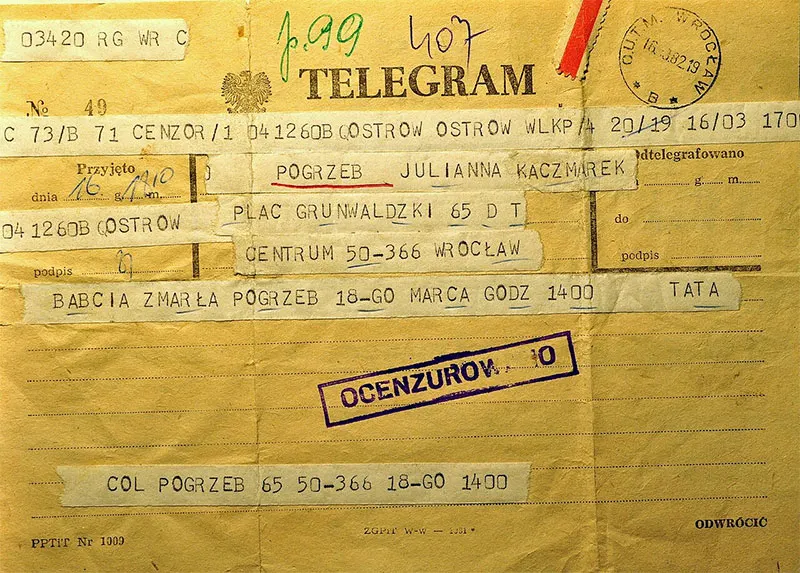
Image: Stiopa, CC BY-SA 3.0 creativecommons.org licenses/by-sa/3.0 via Wikimedia Commons
“Rozmowa Kontrolowana”
The call is controlled
The telephone service was restored on a rolling basis. By January 1982, for those private subscribers who had been reconnected, it came with a chilling psychological caveat. Every call was preceded by a recorded announcement: “Rozmowa kontrolowana, rozmowa kontrolowana” (The call is controlled). It was a blunt reminder that the state was listening to every word spoken on the line.
Your comments are welcome. Please use the comment form below.
Enjoy reading my commentary? Add South Coast View as a Preferred Source on Google to see new posts first.

Subscribe to future posts on this website by email. No spam, just an email when a new post is published. View the posts.
See my explainer titled “What is Substack“.
Posts in Computers and Internet. View all in this subject.

Fix Invisible Text When Copying Blocks in Gutenberg
How The i-Telex System Works
The Three Tees Agency: The 2026 Reunion
